
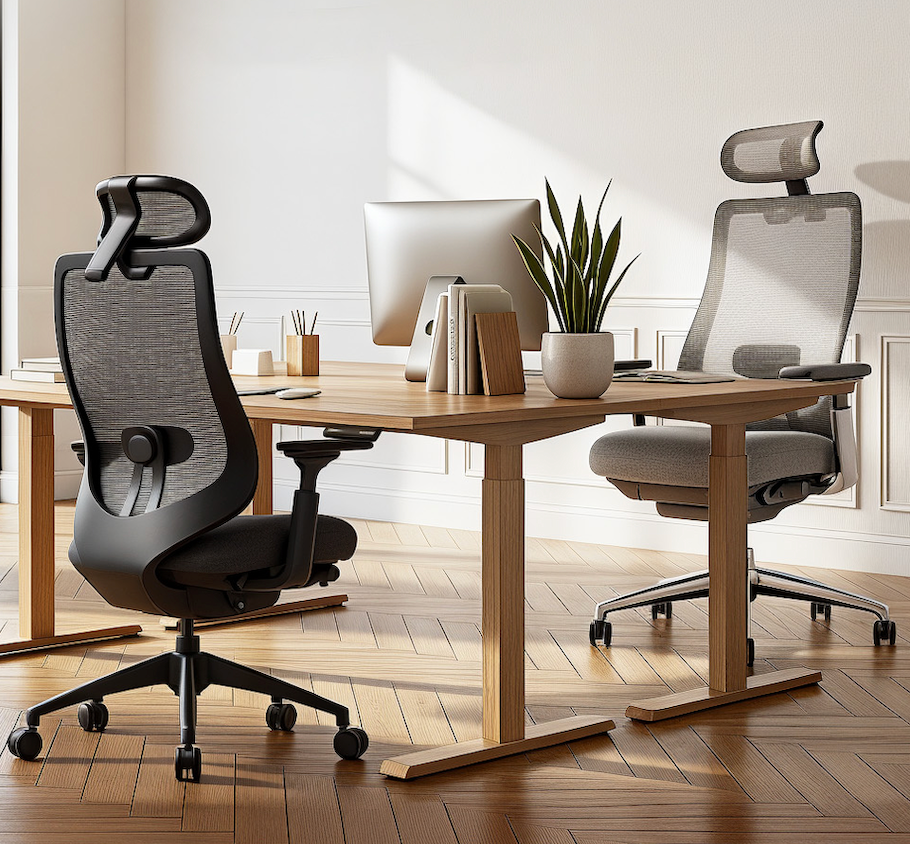
Introduction: Solving Your Chair Selection Dilemma
When customers ask about the difference between the Colamy Atlas and Atlas-01 ergonomic office chairs, we completely understand the confusion. At first glance, these two models look nearly identical, making it difficult to decide which one is right for you.
Simply put: The two chairs are identical in ergonomic design, comfort, adjustability, and price. The only differences are the color options and the base material.

| Model | Color Options | Base Material |
|---|---|---|
| Atlas | Dark Gray / Light Gray | Aluminum Alloy Base |
| Atlas-01 | Black / Dark Gray | Nylon Base |
This article addresses the real concerns behind base materials, breaks down common misconceptions, and helps you make the right decision for your workspace based on facts — not marketing language.
Understanding Office Chair Bases: What Really Matters
Key Clarification: In modern office chairs, the base material (aluminum or nylon) does not directly touch the floor — the casters (wheels) do. This is a common misconception that often influences purchasing decisions.
The real differences between aluminum and nylon bases lie in:
1. Weight distribution and stability
2. Durability under long-term load
3. Visual appearance and workspace integration
4. Total chair weight and mobility
Engineering Reality: The Practical Performance of Nylon Bases

Is a nylon base just “ordinary plastic”? Absolutely not. Modern office chairs use glass fiber–reinforced nylon, an engineering-grade polymer specifically designed for structural applications.
Practical Advantages of Nylon Bases:
- Lighter weight: Easier to move and reposition
- Shock absorption: Better disperses impact during dynamic sitting
- Corrosion resistance: Ideal for humid or coastal environments
- Cost-effective durability: Excellent lifespan at a reasonable price point
For most home offices and standard corporate environments, a high-quality nylon base provides reliable performance throughout the chair’s entire lifecycle.
Premium Experience: Aluminum Alloy Base Benefits

An aluminum alloy base represents premium craftsmanship in office chair manufacturing and offers distinct characteristics for users with specific preferences.
Notable Advantages of Aluminum Alloy Bases:
- Premium aesthetic: Elevates executive offices and client-facing spaces
- Higher rigidity: Minimal deformation under load for maximum stability
- Extended lifespan: Resistant to UV aging and material fatigue, lasting for decades
- Heavier weight distribution: Provides a grounded, solid sitting experience
Safety Performance: German TÜV-Certified Excellence
Both the Atlas and Atlas-01 are equipped with gas lifts certified by German TÜV (Rheinland), a globally recognized authority in safety certification. The gas lift is rated Class 4 (the highest level), delivering:
- Exceptional weight capacity: Easily supports over 150 kg, suitable for various body types
- Long-term durability: Tested for 120,000 lift cycles to ensure lasting performance
- Reliable safety: Strict quality inspection standards for peace of mind
This certification guarantees that both models meet industry-leading safety standards, ensuring dependable performance regardless of your choice.
Making the Choice: A Practical Decision Framework
Since both chairs are identical in performance, comfort, safety, and price, your decision should be based on how well the chair fits your environment and usage habits.
Consider Your Workspace Environment
- Executive office / client reception area: Atlas aluminum base enhances professional presence
- Home office with frequent repositioning: Atlas-01 lightweight nylon base improves maneuverability
- Creative workspace: Light Gray Atlas creates an open, innovative atmosphere
- Traditional corporate environment: Black Atlas-01 conveys authority and focus
Consider Your Usage Habits
- Stationary setup (rarely moving the chair): Aluminum’s weight becomes an advantage
- Dynamic workflow (frequent repositioning): Nylon reduces physical effort
- Long continuous sitting sessions (>4 hours): Some users may prefer the psychological stability of aluminum
- Shared office spaces: Nylon’s impact resistance adapts well to varied usage patterns
From a Materials Science Perspective: Long-Term Performance Comparison
| Metric | Aluminum Alloy Base | Nylon Base |
|---|---|---|
| UV Resistance | Excellent (Anodized finish) | Good (UV inhibitors included) |
| Impact Resistance | Moderate (May dent) | Excellent (Absorbs impact) |
| Long-Term Weight Stability | Stable | Stable |
| Corrosion Resistance | Very Good | Excellent |
| Aging Appearance | Maintains sheen | May show minor surface scratches |
The Question You Should Really Ask
Instead of asking “Which material is better?”, ask yourself:
“During the 2,000+ hours per year I spend sitting, what kind of experience do I want this chair to provide?”
- If you value premium appearance and absolute stability, the Atlas aluminum base offers a solid, executive-level experience
- If you value flexibility and practical durability, the Atlas-01 nylon base provides effortless daily usability
Conclusion: Your Ideal Choice Is Right in Front of You
There is no absolute “better” option between Atlas and Atlas-01. The best choice depends on:
1. Your workspace environment and aesthetic preference
2. Your physical interaction habits with the chair
3. Your professional identity and the image you wish to project
Both models are identical in ergonomic support, comfort, adjustability, and safety performance. Your satisfaction will come from choosing the model that truly aligns with your preferences and working style.
Remember: The most expensive or most premium-looking chair is not necessarily the best one for you. The right chair is the one you use properly, maintain well, and feel physically and mentally comfortable in.
Choose the Atlas or Atlas-01 that genuinely fits your needs — not just the one that pleases the eye. Your ideal ergonomic solution is right here.



Leave a comment
This site is protected by hCaptcha and the hCaptcha Privacy Policy and Terms of Service apply.